11 March 2026
Warehouses are under pressure. More SKUs, smaller orders, and unpredictable peaks demand maximum flexibility and storage density. Expansion isn't always possible or profitable. A new-generation AS/RS system, based on a hexagonal structure, utilizes the full height and volume of the building—with increased performance. With over 30 years of experience in intralogistics, Paul Hermsen, CEO of the Dutch hybrid integrator Inther Group, discusses this new development in more detail.
Anyone running a warehouse today for e-commerce, retail supply, or as a 3PL recognizes the dilemma: demand is growing faster than available space, with additional SKUs and more extreme peak volumes, while labor remains scarce. At the same time, new construction projects are expensive and permitting processes are lengthy. How can you get more out of the same building?
The answer comes from Hexxabotics, a new generation of Automated Storage and Retrieval Systems (AS/RS) currently available exclusively through Inther Group. It combines a hexagonal storage structure with autonomous robots that move both horizontally and vertically. This creates a solution that optimally utilizes not just square meters, but entire cubic meters.
Biomimicry as a design principle
Paul Hermsen explains the basic principles: “The system is based on biomimicry: applying principles from nature to technical challenges. The hexagonal shape – familiar from honeycombs – is known for its exceptional efficiency and strength while using minimal materials.”
"Nature rarely chooses coincidence. The hexagon is one of the most efficient shapes for filling space without waste. By translating this principle into warehouse automation, a storage structure with extremely high density and complete accessibility is created."
"Unlike traditional aisle-based systems or cube solutions, the continuous hexagonal structure allows storage positions to be accessed from multiple directions. This increases flexibility and reduces waiting times", says Hermsen.
A key advantage is the complete decoupling of the number of movements from the number of storage locations. "A system with 100,000 storage locations and only 400 movements per hour can be as simple as a system with 10,000 locations and 4,000 movements per hour. And everything in between."
Scalable without structural intervention
A major bottleneck in many automation solutions is that capacity expansion requires extensive hardware additions such as roller conveyors, cabling, control cabinets, or even building expansions.
At Hexxabotics, scalability lies primarily in the number of robots and towers. "When throughput volumes increase, you add robots instead of steel. When more storage is required, you add towers," says Hermsen. "This makes the system particularly suitable for e-commerce companies with significant peak loads or rapidly expanding product ranges. Hexxabotics also offers flexibility with manageable investments for 3PLs, where contracts and volumes fluctuate. Increased throughput capacity can easily be deployed during peak periods without major investments."
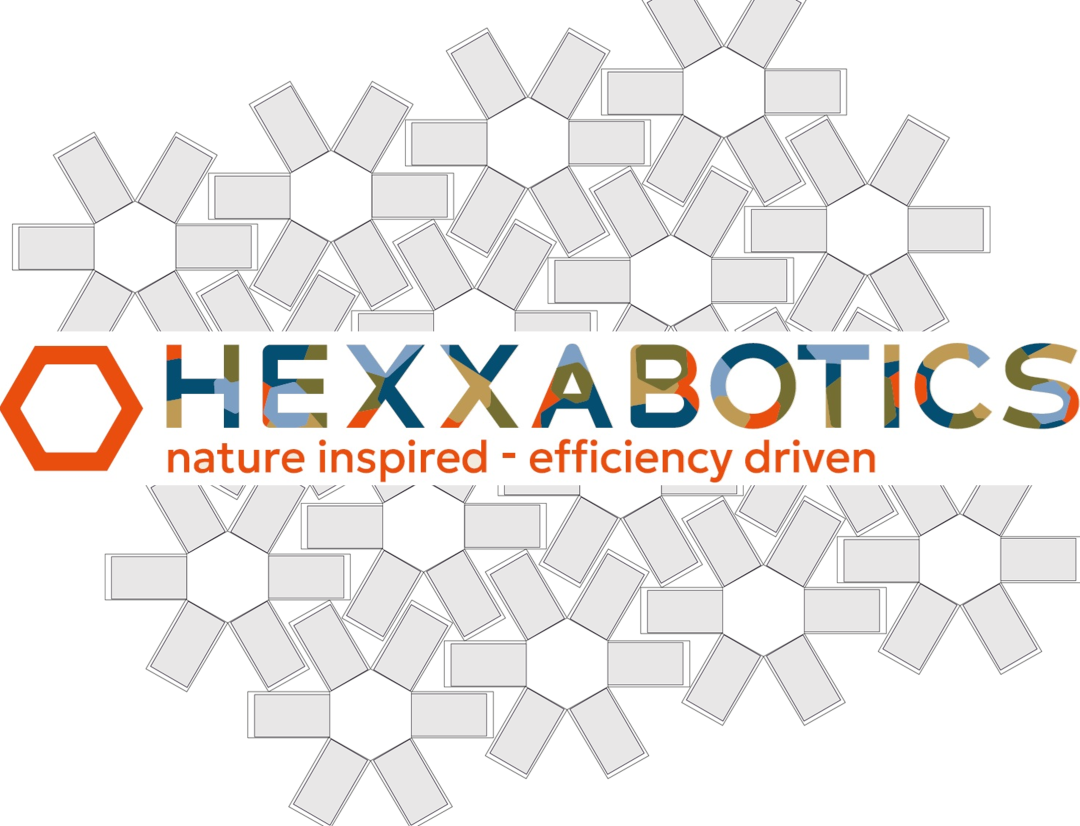
The hexagonal pattern of the Hexxabotics towers maximizes storage capacity with direct access to inventory
From square to cubic optimization
While many optimization projects still primarily focus on square meters, the strategic focus is shifting increasingly to three-dimensional optimization due to increasingly scarce and expensive space.
"Many warehouses make limited use of the full building height, especially in manual or some cube-automation environments. By combining a self-supporting hexagonal structure with vertically moving robots, Hexxabotics can utilize the entire building height, up to 16 meters, for storage. For companies struggling with space constraints or high land prices, increased storage capacity within the same footprint is a strategic advantage: growth without relocation or expansion,” Hermsen continues.
Lower energy consumption and maintenance
Another distinguishing feature is that no electrification is required in the rack structure. The robots operate autonomously and are charged while in process. This not only reduces energy consumption but also simplifies maintenance and relocation. Furthermore, there are no additional requirements for (scarce) electricity.
Hermsen: “Companies invest with a horizon of 15-20 years. A lifecycle approach is therefore essential. It's not just the initial investment that counts, but especially the operational costs, energy consumption, and future adaptability. Because a Hexxabotics system doesn't require complex wiring in the racks, the construction remains relatively simple. This translates into a lower total cost of ownership over the entire lifecycle. Moreover, the system can be disassembled and reassembled relatively easily during a relocation.”
Applicable in various sectors
The technology is suitable for a wide range of applications: from fine-grained e-commerce picking to retail supplies, spare parts, and 3PL logistics. Thanks to the high storage density and direct accessibility of individual bins, both fast order picking processes and buffer storage can be efficiently implemented.
Hexxabotics is fully modular and tailored to the specific profile of the operation. "Instead of having to invest in infrastructure upfront for future capacity, organizations can allow capacity and performance to grow in line with actual demand. This makes investments more manageable and reduces long-term financial risk. Automation follows the process, not the other way around," emphasizes Hermsen.
"Hexxabotics demonstrates how a fundamentally different geometry can lead to new possibilities in warehouse design with higher storage densities, performance, and flexibility for future growth. For organizations that want to maximize the use of their existing building without compromising speed or scalability, this approach offers an interesting alternative within the spectrum of modern AS/RS solutions," he concludes.
Hexxabotics will have its world premiere at LogiMAT from March 24-26 at the Inther Group booth (Hall 5, D33).