10 June 2026
Many warehouses invest in automation but fail to utilize their full potential due to fragmented software and poor integration. SAP Extended Warehouse Management (EWM) offers a powerful foundation, but according to Martijn Herder, CEO of Inther Group, the difference is made in the implementation. "That is precisely where the added value of an integrated approach lies, where software and logistics operations come together."
Automation is increasingly being deployed to increase capacity and efficiency, but without the right software layer, that investment often remains underutilized. SAP Extended Warehouse Management (EWM) has grown into one of the most comprehensive and flexible warehouse management systems on the market. "Yet technology alone is not enough," says Martijn Herder, CEO at Inther Group. "The real challenge lies in translating this powerful software into an optimally functioning logistics operation."
From software implementation to total solution
While many implementations focus on the technical configuration of a warehouse management system, Inther Group opts for a broader approach. By taking an integrated approach to software, automation, and intralogistics processes, a solution is created that works not only on paper but also on the shop floor.
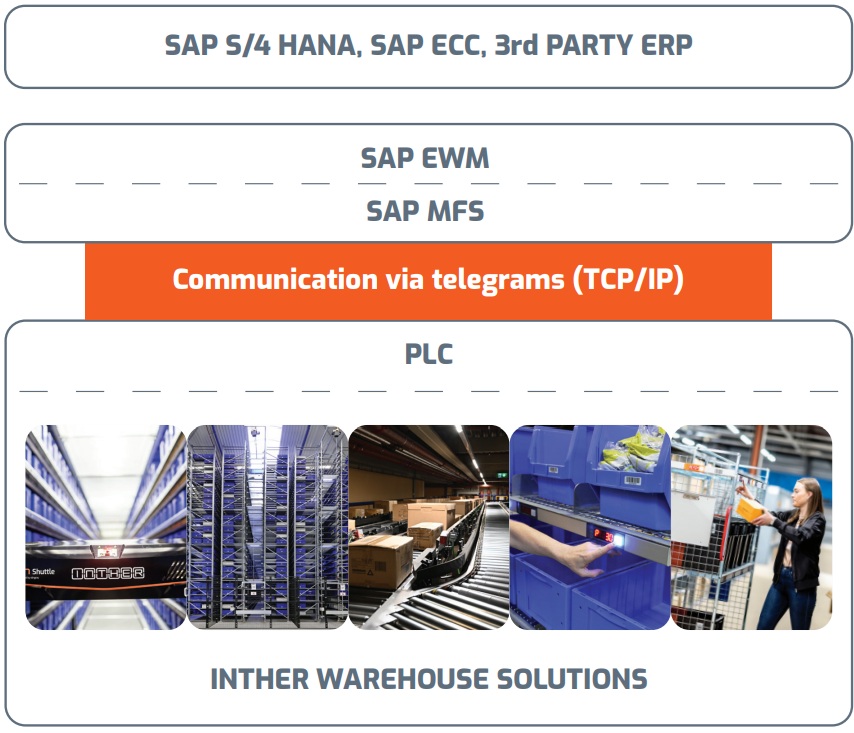 In modern warehouses, the integration of software and hardware is crucial.
Herder emphasizes that difference: "SAP EWM is extremely powerful, but also complex. The added value lies in how you apply it within the operation. Thanks to our experience with both software and automation, we optimize processes end-to-end rather than just installing a system." This integrated approach ensures that SAP EWM is not implemented as a standalone IT system, but as the central brain of the warehouse.
Seamless integration with automation
In modern warehouses, the link between software and material handling systems is crucial. Think of shuttle systems, sorters, AMRs, and conveyors. These installations require real-time control and error-free communication. "We have years of experience developing and integrating these systems, and we translate that knowledge directly into SAP EWM implementations. This creates a stable and efficient interaction between software and hardware," says Herder.
"The greatest gain lies in the integration," he continues. When SAP EWM and automation align perfectly, you get the most out of both. This is reflected in throughput, reliability, and scalability. For end users, this means fewer disruptions, higher performance, and a future-proof warehouse setup.
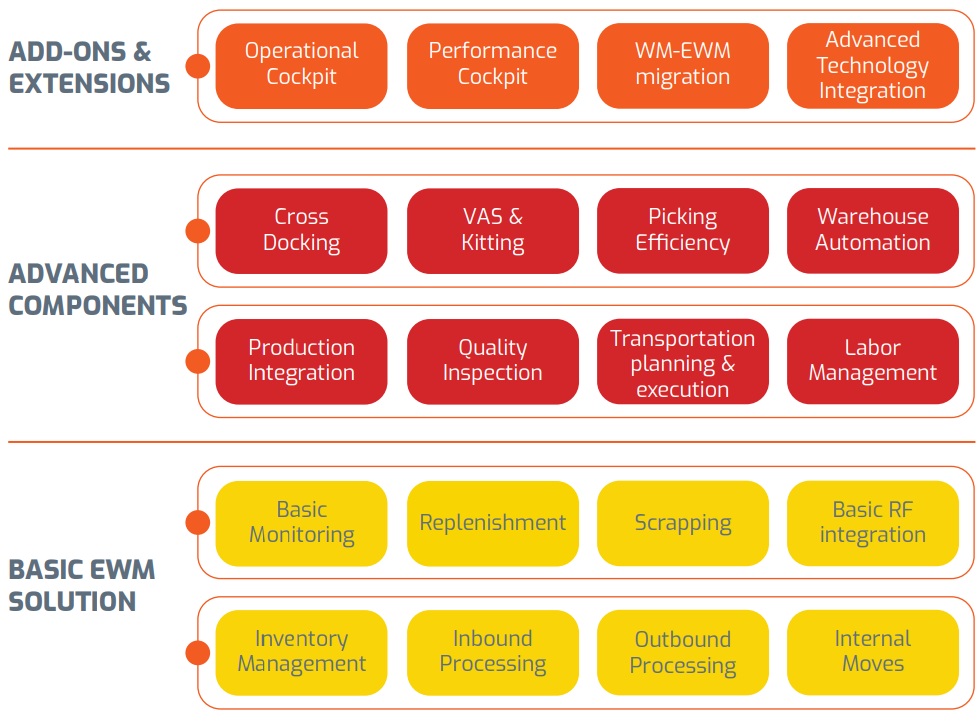 SAP EWM is one of the most comprehensive and flexible warehouse management systems on the market.
Real-time control and insight
According to Herder, a well-configured SAP EWM environment offers complete real-time control over all warehouse processes. "Every step is transparent and manageable. The goal is not just insight, but control. You want to be able to manage based on real-time data so that you can respond flexibly to changes in demand and operations. With our integration expertise, this data is immediately translated into action."
Scalability without complexity
For many organizations, growth is unpredictable. New customers, changing order profiles, or seasonal peaks call for a scalable solution. SAP EWM offers that flexibility, but the configuration determines how effectively it is utilized.
Thanks to Inther Group's modular approach, processes can be easily adapted or expanded without leading to additional complexity. New automation, extra capacity, or modified workflows are seamlessly integrated within the same environment. This makes the system suitable for a wide range of applications: from e-commerce and retail to 3PL and production environments.
One partner for software and operations
An important advantage of this approach is that one party is responsible for both the software and the integration with physical logistics. This prevents fragmentation and ensures short lines of communication during both implementation and management. Herder: "In many projects, you see that software and automation are supplied by different parties. This often leads to coordination problems. By combining that responsibility, we can act faster and achieve better results. For organizations, this means less risk, faster implementations, and a solution that truly aligns with practical needs."
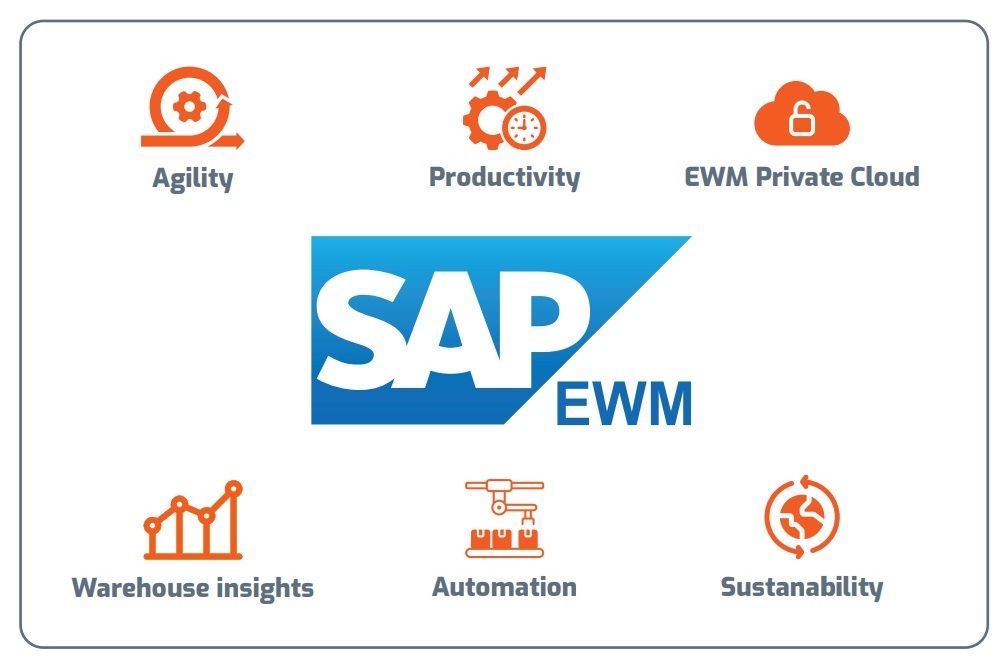 SAP Extended Warehouse Management (EWM) provides a powerful foundation.
From implementation to continuous optimization
An SAP EWM project does not stop after going live, Herder emphasizes. "It is precisely after that the phase begins in which processes are further optimized and adapted to changing circumstances. Inther Group supports organizations in this phase as well, focusing on performance improvement, expansion, and innovation. Think of adding new automation, optimizing picking strategies, or deploying data analysis for further efficiency."
"The combination of SAP EWM with Inther Group's integrated approach offers a solid foundation for warehouses that want to grow and innovate. Not just by digitizing processes, but by making them truly smarter and more efficient." For Herder, the difference is clear: "It is not the technology itself, but the way it is applied that determines the success of the warehouse."